Buy quick-check.eu ?
We are moving the project
quick-check.eu .
Are you interested in purchasing the domain
quick-check.eu ?
domain@kv-gmbh.de · 0541-91531010
Buy quick-check.eu ?
Why doesn't glycine have D- and L-forms?
Glycine does not have D- and L-forms because it is the simplest amino acid and has a hydrogen atom as its side chain. Unlike other amino acids that have a chiral carbon atom in their side chains, glycine's side chain is not chiral, meaning it does not have a mirror image form. As a result, glycine does not have D- and L-forms like other amino acids. **
Mega Fox or Jessica Alba?
Both Mega Fox and Jessica Alba are talented actresses with their own unique styles and strengths. Mega Fox is known for her roles in action films and her striking appearance, while Jessica Alba has a diverse range of roles and is also a successful businesswoman. Ultimately, the choice between the two comes down to personal preference and the specific qualities that each individual admires in an actress. **
Similar search terms for Barbera-d-Alba-L
Top-Angebote
Products related to Barbera-d-Alba-L:
-
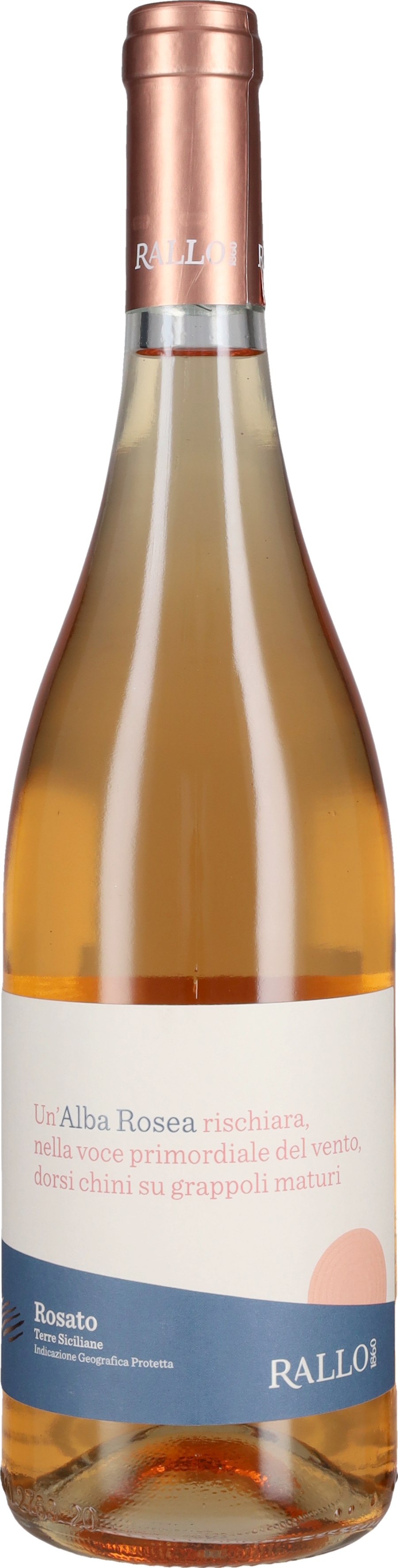
Rosato 'Alba Rosea' Rallo 2025The Rosé ‘Alba Rosea’ from the important Sicilian winery Rallo is a bottle with a light and fragrant style, produced in the Trapani area with grapes from organic farming. The name of this rosé wine derives from its peculiar color, a warm and soft pink like the sky in the early hours of the morning. It is an expression of Perricone, a black grape variety that is distinguished, among other things, by its high acidity, a quality that favors the production of rosé wines. Due to its particular sensitivity to phylloxera, this grape variety was partially forgotten in the last century, replaced over time by new plantings of Nero d’Avola. However, in recent times, attention on this grape has seen significant growth. Rallo ‘Alba Rosea’ Rosato comes from only Perricone grapes grown under certified organic farming in the municipality of Alcamo, precisely in the Pattipiccolo estate. Here the soils are sandy, the altitude is 200 meters above sea level.while the exposure is from south to southeast. The grapes, hand-picked in September in boxes, are transferred to the winery where they undergo a soft pressing with skin maceration for 15-20 days, accompanied by alcoholic fermentation in temperature-controlled stainless steel tanks. Malolactic fermentation is not carried out and after a short stay always in steel, the wine is finally bottled. The color of the Rosé ‘Alba Rosea’ by Rallo is coral pink. The nose offers fragrant and crisp hints of red fruits like marasca, enriched by floral and citrus notes. Refreshing, savory, and balanced the tasting is broad and has good persistence, with a smooth finish where the sensations of red fruits previously perceived on the nose return.13,00 £*Shipping: 48,00 £Secure redirect to the provider
-
Rosato 'Alba Rosea' Rallo 2023The Rosé ‘Alba Rosea’ from the important Sicilian winery Rallo is a bottle with a light and fragrant style, produced in the Trapani area with grapes from organic farming. The name of this rosé wine derives from its peculiar color, a warm and soft pink like the sky in the early hours of the morning. It is an expression of Perricone, a black grape variety that stands out, among other things, for its high acidity, a quality that favors the production of rosé wines. Due to its particular sensitivity to phylloxera, this grape variety was partially forgotten in the last century, replaced over time by new plantings of Nero d’Avola. However, in recent times, attention to this grape has seen significant growth. Rallo ‘Alba Rosea’ Rosato comes from only Perricone grapes grown under certified organic farming in the municipality of Alcamo, precisely in the Pattipiccolo estate. Here the soils are sandy, the altitude is 200 meters above sea level.while the exposure ranges from south to southeast. The bunches, hand-picked in September in crates, are transferred to the winery where they undergo a soft pressing with skin maceration for 15-20 days, accompanied by alcoholic fermentation in temperature-controlled stainless steel tanks. Malolactic fermentation is not carried out and after a short rest always in steel, the wine is finally bottled. The color of Rallo’s ‘Alba Rosea’ Rosato is coral pink. The nose offers fragrant and crunchy hints of red fruits like marasca, enriched by floral and citrus notes. Refreshing, savory, and balanced the tasting, broad and with good persistence, with a smooth finish where the sensations of red fruits previously perceived on the nose return.13,00 £*Shipping: 48,00 £Secure redirect to the provider
-
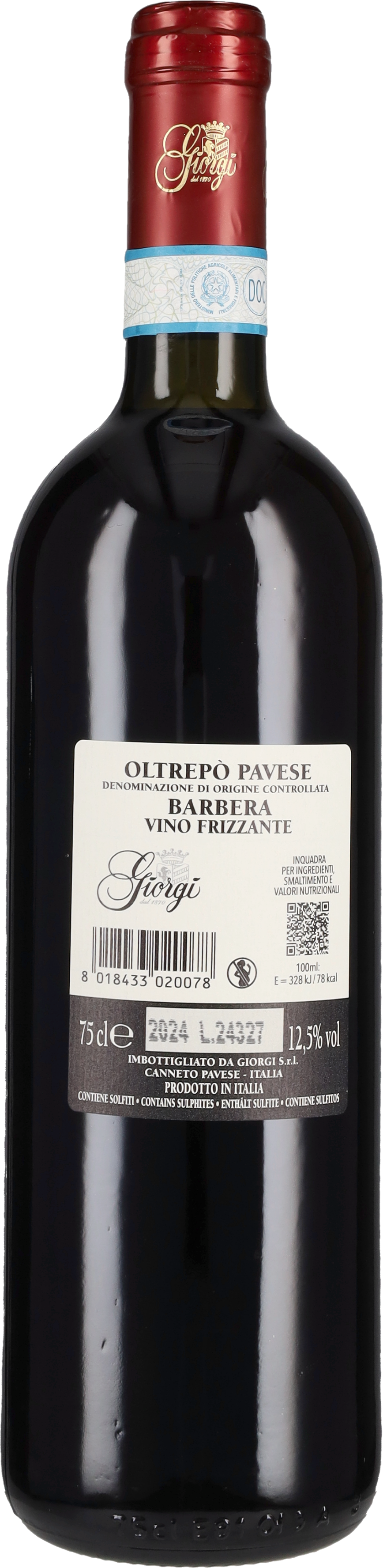
Barbera Frizzante GiorgiThe Barbera Frizzante offered by the Giorgi winery represents one of the most popular and traditional wines of the Oltrepò Pavese lands. The grape variety marks the territorial continuity between the Monferrato area and this corner of Lombardy, which has been dedicated to viticulture for centuries. Barbera, in fact, has spread from the hilly areas of Piemonte eastward into the Oltrepò Pavese and Piacentino regions, becoming one of the most important and identity-defining red grape varieties. The Pavia tradition has always favored a sparkling version of Barbera, which enhances its fruity fragrance and immediate pleasantness. It is a lively and cheerful wine, simple and young, ideal for tasting during convivial moments with a platter of local cured meats. The red Barbera Frizzante from Giorgi is born in the Canneto Pavese area, where this historic family estate manages a large estate of about 60 hectares. The vineyards are located in a hilly area and enjoy a mild and ventilated microclimate, allowing for excellent ripening. The soils are very suitable and consist of calcareous-clay marls, very suitable especially for red grape varieties. Among the rows, there is space mainly for the classic grape varieties of Oltrepò Pavese: Croatina, Barbera, Uva Rara Vespolina, and the international Pinot Nero and Chardonnay, which have adapted very well to this area. The harvest is carried out manually around mid-September, and the Barbera grapes are destemmed and sent for fermentation at a controlled temperature of 28-30 °C with skin maceration. This is followed by the prise de mousse, refermentation in autoclave, and a 6-month aging period in steel before bottling. The Barbera Frizzante wine from Giorgi perfectly follows the style of the local wines, often vinified with a lively effervescence, which makes its profile more joyful. In the glass, it presents a deep ruby red color with youthful purple reflections. The bouquet is rich and exuberant with a light effervescence that enhances the floral aromas of violet, the scents of small dark berries, ripe red plum, cherry, and light spicy sensations. The entry on the palate is fragrant and juicy, with ripe fruit and a savory and very fresh finish.9,00 £*Shipping: 48,00 £Secure redirect to the provider
-
Alba Warm Marble Effect Decorative BookendsAdd sculptural style to your shelves with the Alba Warm Marble Effect Decorative Bookends. Each piece pairs a smooth sphere with a sleek rectangular block, creating a modern, architectural look. The warm stone-effect finish brings soft neutral tones that blend beautifully with any décor. Perfect for propping up favourite novels or coffee table books, these decorative bookends are both practical and eye-catching accents for living rooms, offices, or bedrooms. Dimensions: 10 x 10 x 18cm24,00 £*Shipping: 4,99 £Secure redirect to the provider


-
How can the formula be rearranged for l and d?
To rearrange the formula for l and d, we can isolate each variable on one side of the equation. For example, to solve for l, we can divide both sides of the equation by w to get l = V / w. Similarly, to solve for d, we can divide both sides by l to get d = V / l. By rearranging the formula in this way, we can easily calculate the values of l and d based on the given volume and width. **
-
What is the difference between D-glucose and L-glucose?
D-glucose and L-glucose are both isomers of glucose, meaning they have the same chemical formula but different spatial arrangements of their atoms. The main difference between the two is the orientation of the hydroxyl group on the chiral carbon farthest from the carbonyl group. In D-glucose, the hydroxyl group is on the right side, while in L-glucose, it is on the left side. This difference in orientation gives the two isomers distinct properties and biological functions. **
-
Are glucose and glucose the D-glucose and L-glucose themselves?
No, glucose and L-glucose are not the same. Glucose refers to the simple sugar molecule that is commonly found in foods and used by the body for energy. D-glucose and L-glucose, on the other hand, refer to specific forms of glucose that differ in their molecular arrangement. D-glucose is the natural form of glucose found in the body and in foods, while L-glucose is a rare form that is not commonly found in nature. **
-
What is the difference between L-tartaric acid and D-tartaric acid?
L-tartaric acid and D-tartaric acid are mirror-image isomers of each other, known as enantiomers. The main difference between them is their spatial arrangement of atoms. L-tartaric acid has a left-handed configuration, while D-tartaric acid has a right-handed configuration. This difference in configuration gives them different properties, such as their ability to rotate plane-polarized light in opposite directions. Despite their differences, they have similar chemical and physical properties. **

Who is prettier, Scarlett Johansson or Jessica Alba?
Beauty is subjective and both Scarlett Johansson and Jessica Alba are considered to be stunning in their own ways. Scarlett is known for her classic Hollywood beauty and versatility as an actress, while Jessica is admired for her exotic features and natural charm. Ultimately, it comes down to personal preference as to who is considered prettier. **
What do you think about the name Alba?
I think the name Alba is elegant and timeless. It has a soft and gentle sound to it, making it quite charming. Additionally, Alba has a beautiful meaning as it is derived from Latin, meaning "dawn" or "sunrise", which adds a poetic and hopeful quality to the name. Overall, I believe Alba is a lovely choice for a baby girl. **
Top-Angebote
Products related to Barbera-d-Alba-L:
-
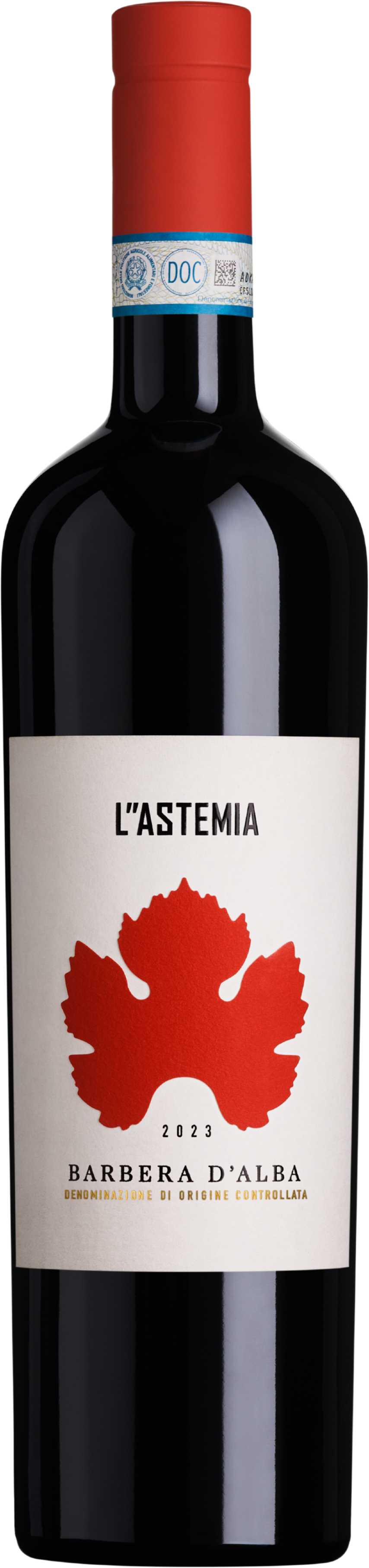
Barbera d'Alba L''Astemia 2023The Barbera d’Alba from L’Astemia is born in a reality of the Langhe with an unconventional character, founded by Sandra Vezza and built around an idea of wine that combines tradition and design. Between Barolo and Monforte d’Alba, the Barbera vineyards extend over hills where this grape variety, considered the queen of the Langhe, finds an authentic and direct expression. The vinification of Barbera d’Alba from L’Astemia involves a maceration on the skins of about 18 days, followed by fermentation and aging exclusively in steel for about 6 months. This choice enhances the purity of the fruit and the juiciest component of the grape variety, maintaining a clear and immediate profile without wood intervention.The Barbera d’Alba by L’Astemia presents a bouquet rich in red and black fruits, with notes of cherry, blackberry, and light balsamic and spicy nuances. The taste is full and enveloping, supported by a lively freshness and a balanced structure that prolongs the drinking experience. It pairs naturally with agnolotti del plin in roast sauce.16,00 £*Shipping: 48,00 £Secure redirect to the provider
-
Rosato 'Alba Rosea' Rallo 2025The Rosé ‘Alba Rosea’ from the important Sicilian winery Rallo is a bottle with a light and fragrant style, produced in the Trapani area with grapes from organic farming. The name of this rosé wine derives from its peculiar color, a warm and soft pink like the sky in the early hours of the morning. It is an expression of Perricone, a black grape variety that is distinguished, among other things, by its high acidity, a quality that favors the production of rosé wines. Due to its particular sensitivity to phylloxera, this grape variety was partially forgotten in the last century, replaced over time by new plantings of Nero d’Avola. However, in recent times, attention on this grape has seen significant growth. Rallo ‘Alba Rosea’ Rosato comes from only Perricone grapes grown under certified organic farming in the municipality of Alcamo, precisely in the Pattipiccolo estate. Here the soils are sandy, the altitude is 200 meters above sea level.while the exposure is from south to southeast. The grapes, hand-picked in September in boxes, are transferred to the winery where they undergo a soft pressing with skin maceration for 15-20 days, accompanied by alcoholic fermentation in temperature-controlled stainless steel tanks. Malolactic fermentation is not carried out and after a short stay always in steel, the wine is finally bottled. The color of the Rosé ‘Alba Rosea’ by Rallo is coral pink. The nose offers fragrant and crisp hints of red fruits like marasca, enriched by floral and citrus notes. Refreshing, savory, and balanced the tasting is broad and has good persistence, with a smooth finish where the sensations of red fruits previously perceived on the nose return.13,00 £*Shipping: 48,00 £Secure redirect to the provider
-
Rosato 'Alba Rosea' Rallo 2023The Rosé ‘Alba Rosea’ from the important Sicilian winery Rallo is a bottle with a light and fragrant style, produced in the Trapani area with grapes from organic farming. The name of this rosé wine derives from its peculiar color, a warm and soft pink like the sky in the early hours of the morning. It is an expression of Perricone, a black grape variety that stands out, among other things, for its high acidity, a quality that favors the production of rosé wines. Due to its particular sensitivity to phylloxera, this grape variety was partially forgotten in the last century, replaced over time by new plantings of Nero d’Avola. However, in recent times, attention to this grape has seen significant growth. Rallo ‘Alba Rosea’ Rosato comes from only Perricone grapes grown under certified organic farming in the municipality of Alcamo, precisely in the Pattipiccolo estate. Here the soils are sandy, the altitude is 200 meters above sea level.while the exposure ranges from south to southeast. The bunches, hand-picked in September in crates, are transferred to the winery where they undergo a soft pressing with skin maceration for 15-20 days, accompanied by alcoholic fermentation in temperature-controlled stainless steel tanks. Malolactic fermentation is not carried out and after a short rest always in steel, the wine is finally bottled. The color of Rallo’s ‘Alba Rosea’ Rosato is coral pink. The nose offers fragrant and crunchy hints of red fruits like marasca, enriched by floral and citrus notes. Refreshing, savory, and balanced the tasting, broad and with good persistence, with a smooth finish where the sensations of red fruits previously perceived on the nose return.13,00 £*Shipping: 48,00 £Secure redirect to the provider
-
Why doesn't glycine have D- and L-forms?
Glycine does not have D- and L-forms because it is the simplest amino acid and has a hydrogen atom as its side chain. Unlike other amino acids that have a chiral carbon atom in their side chains, glycine's side chain is not chiral, meaning it does not have a mirror image form. As a result, glycine does not have D- and L-forms like other amino acids. **
-
Mega Fox or Jessica Alba?
Both Mega Fox and Jessica Alba are talented actresses with their own unique styles and strengths. Mega Fox is known for her roles in action films and her striking appearance, while Jessica Alba has a diverse range of roles and is also a successful businesswoman. Ultimately, the choice between the two comes down to personal preference and the specific qualities that each individual admires in an actress. **
-
How can the formula be rearranged for l and d?
To rearrange the formula for l and d, we can isolate each variable on one side of the equation. For example, to solve for l, we can divide both sides of the equation by w to get l = V / w. Similarly, to solve for d, we can divide both sides by l to get d = V / l. By rearranging the formula in this way, we can easily calculate the values of l and d based on the given volume and width. **
-
What is the difference between D-glucose and L-glucose?
D-glucose and L-glucose are both isomers of glucose, meaning they have the same chemical formula but different spatial arrangements of their atoms. The main difference between the two is the orientation of the hydroxyl group on the chiral carbon farthest from the carbonyl group. In D-glucose, the hydroxyl group is on the right side, while in L-glucose, it is on the left side. This difference in orientation gives the two isomers distinct properties and biological functions. **
Similar search terms for Barbera-d-Alba-L
-
Barbera Frizzante GiorgiThe Barbera Frizzante offered by the Giorgi winery represents one of the most popular and traditional wines of the Oltrepò Pavese lands. The grape variety marks the territorial continuity between the Monferrato area and this corner of Lombardy, which has been dedicated to viticulture for centuries. Barbera, in fact, has spread from the hilly areas of Piemonte eastward into the Oltrepò Pavese and Piacentino regions, becoming one of the most important and identity-defining red grape varieties. The Pavia tradition has always favored a sparkling version of Barbera, which enhances its fruity fragrance and immediate pleasantness. It is a lively and cheerful wine, simple and young, ideal for tasting during convivial moments with a platter of local cured meats. The red Barbera Frizzante from Giorgi is born in the Canneto Pavese area, where this historic family estate manages a large estate of about 60 hectares. The vineyards are located in a hilly area and enjoy a mild and ventilated microclimate, allowing for excellent ripening. The soils are very suitable and consist of calcareous-clay marls, very suitable especially for red grape varieties. Among the rows, there is space mainly for the classic grape varieties of Oltrepò Pavese: Croatina, Barbera, Uva Rara Vespolina, and the international Pinot Nero and Chardonnay, which have adapted very well to this area. The harvest is carried out manually around mid-September, and the Barbera grapes are destemmed and sent for fermentation at a controlled temperature of 28-30 °C with skin maceration. This is followed by the prise de mousse, refermentation in autoclave, and a 6-month aging period in steel before bottling. The Barbera Frizzante wine from Giorgi perfectly follows the style of the local wines, often vinified with a lively effervescence, which makes its profile more joyful. In the glass, it presents a deep ruby red color with youthful purple reflections. The bouquet is rich and exuberant with a light effervescence that enhances the floral aromas of violet, the scents of small dark berries, ripe red plum, cherry, and light spicy sensations. The entry on the palate is fragrant and juicy, with ripe fruit and a savory and very fresh finish.9,00 £*Shipping: 48,00 £Secure redirect to the provider
-
Alba Warm Marble Effect Decorative BookendsAdd sculptural style to your shelves with the Alba Warm Marble Effect Decorative Bookends. Each piece pairs a smooth sphere with a sleek rectangular block, creating a modern, architectural look. The warm stone-effect finish brings soft neutral tones that blend beautifully with any décor. Perfect for propping up favourite novels or coffee table books, these decorative bookends are both practical and eye-catching accents for living rooms, offices, or bedrooms. Dimensions: 10 x 10 x 18cm24,00 £*Shipping: 4,99 £Secure redirect to the provider
-
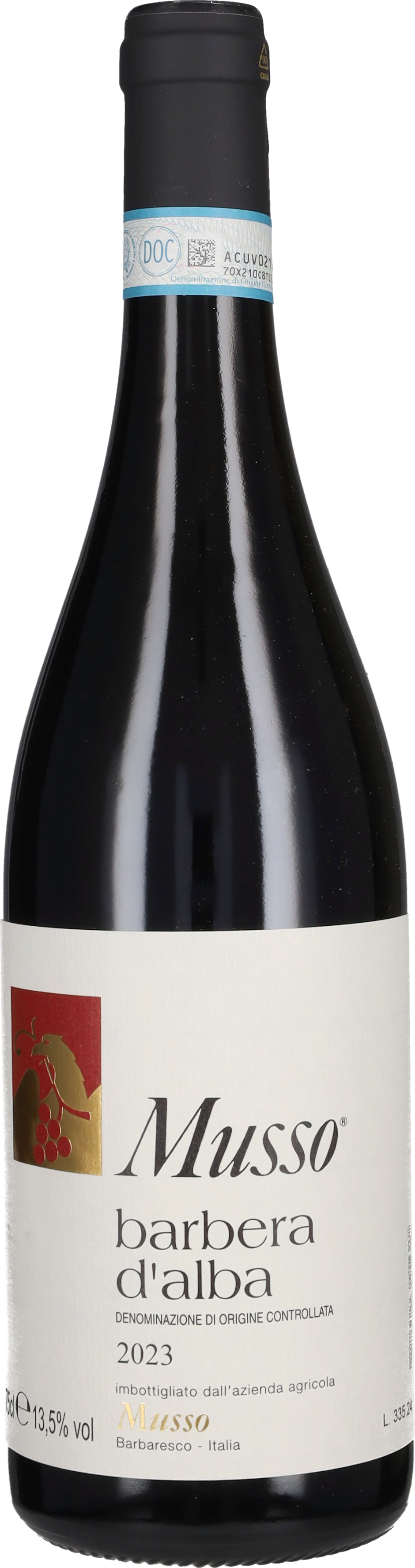
Barbera d'Alba Musso 2023The Barbera d'Alba from the Piedmontese producer Musso is a bottle with a lively and fruity taste, typical characteristics of this black grape variety. The estate, located within the municipality of Barbaresco, manages just over 10 hectares of vineyards reserved for the traditional varieties of Lower Piedmont, namely Nebbiolo, Barbera, Dolcetto, Freisa, and Arneis. All processing operations take place in the winery owned by the Musso family, today represented by Valter, his son Emanuele, who assists him in commercial and communication matters, and his nephew Luca Accornero, who along with Valter takes care of the management of the vineyards. Musso Barbera d'Alba originates from only Barbera grapes grown between 240 and 270 meters above sea level. The vines, exposed to the southwest, rest on predominantly limestone soils characterized by frequent clay interferences, which give greater thickness to the soil. The grapes are hand-picked and then destemmed and crushed, with the must thus obtained fermenting in contact with the skins, for part of the mass in tanks of stainless steel and for the remaining part in 500-liter oak tonneau. Once the fermentation processes are completed, the two masses are blended for aging of about 12 months first in tonneau and subsequently in large barrels of 20 hectoliters, followed by an additional year of refinement in bottle before being released on the market. The color of Musso's Barbera d'Alba is intense garnet red with ruby reflections. The nose unfolds with ethereal and intensely fruity aromas of cherry in spirits and berries, enriched by toasted and spiced notes of cinnamon and vanilla. Intense and enveloping sip, well balanced by lively freshness and smooth tannin.19,00 £*Shipping: 48,00 £Secure redirect to the provider
-
Barbera D'Asti Sette 2024La Barbera d’Asti firmata Sette mostra una grande tipicità varietale e territoriale, con vividi profumi fruttati che preludono al gusto fresco e prestante. Le maggiori attenzioni della tenuta Sette, localizzata nel cuore del Bricco di Nizza, all’interno del territorio del Monferrato, sono rivolte proprio al Barbera, vitigno che in questa zona raggiunge la sua massima espressione qualitativa. Oltre a puntare esclusivamente su varietà locali, i soci Gianluca Colombo, Gregorio Gitti e Gino Della Porta hanno abbracciato fin da subito pratiche produttive sostenibili, fondate sulla biodinamica. La Barbera d’Asti Sette viene realizzata a partire da sole uve Barbera coltivate in accordo ai dettami dell’agricoltura biologica e della biodinamica all’interno di vigneti di 25 anni di età nel cuore della denominazione Nizza DOCG, collocati a un’altitudine di 200 metri sul livello del mare. Le viti beneficiano dell’abbondanza di gesso che caratterizza i suoli, fattore che ha indotto i soci Gianluca, Gregorio e Gino a etichettare questo vino come Barbera d’Asti DOCG, a loro avviso più adatta per questa tipologia di terreno. Dopo la vendemmia i grappoli vengono ammostati in vasche di cemento dove la fermentazione alcolica occorre spontaneamente, accompagnata da una lunga macerazione a cappello sommerso. Sempre in cemento si svolge il conseguente periodo di maturazione di alcuni mesi. Nel calice, la Barbera d’Asti della piccola realtà viticola artigianale Sette esibisce una veste rosso rubino intenso dalle sfumature purpuree. Al naso affiorano sentori decisi di lampone, ciliegia e bacche rosse, contornati da percezioni di sottobosco, fiori rossi e spezie varie. Sviluppo gustativo fresco e guizzante, dal tannino piacevole e l’evocativa vena sapida che accompagnano il generoso finale fruttato.16,00 £*Shipping: 48,00 £Secure redirect to the provider
-
Are glucose and glucose the D-glucose and L-glucose themselves?
No, glucose and L-glucose are not the same. Glucose refers to the simple sugar molecule that is commonly found in foods and used by the body for energy. D-glucose and L-glucose, on the other hand, refer to specific forms of glucose that differ in their molecular arrangement. D-glucose is the natural form of glucose found in the body and in foods, while L-glucose is a rare form that is not commonly found in nature. **
-
What is the difference between L-tartaric acid and D-tartaric acid?
L-tartaric acid and D-tartaric acid are mirror-image isomers of each other, known as enantiomers. The main difference between them is their spatial arrangement of atoms. L-tartaric acid has a left-handed configuration, while D-tartaric acid has a right-handed configuration. This difference in configuration gives them different properties, such as their ability to rotate plane-polarized light in opposite directions. Despite their differences, they have similar chemical and physical properties. **
-
Who is prettier, Scarlett Johansson or Jessica Alba?
Beauty is subjective and both Scarlett Johansson and Jessica Alba are considered to be stunning in their own ways. Scarlett is known for her classic Hollywood beauty and versatility as an actress, while Jessica is admired for her exotic features and natural charm. Ultimately, it comes down to personal preference as to who is considered prettier. **
-
What do you think about the name Alba?
I think the name Alba is elegant and timeless. It has a soft and gentle sound to it, making it quite charming. Additionally, Alba has a beautiful meaning as it is derived from Latin, meaning "dawn" or "sunrise", which adds a poetic and hopeful quality to the name. Overall, I believe Alba is a lovely choice for a baby girl. **
* All prices are inclusive of VAT and, if applicable, plus shipping costs. The offer information is based on the details provided by the respective shop and is updated through automated processes. Real-time updates do not occur, so deviations can occur in individual cases. ** Note: Parts of this content were created by AI.