Buy quick-check.eu ?
We are moving the project
quick-check.eu .
Are you interested in purchasing the domain
quick-check.eu ?
domain@kv-gmbh.de · 0541-91531010
Buy quick-check.eu ?
How can one quickly check the collinearity of lines?
One quick way to check the collinearity of lines is to calculate the determinant of a matrix formed by the coefficients of the lines. If the determinant is zero, then the lines are collinear. Another method is to compare the slopes of the lines - if the slopes are proportional, then the lines are collinear. Additionally, one can also check if the lines intersect at a single point, as collinear lines will intersect at infinitely many points. **
Why are equipotential lines always perpendicular to field lines?
Equipotential lines are always perpendicular to field lines because the electric field is always perpendicular to the equipotential surface. This is because the electric field is the gradient of the electric potential, and the gradient is always perpendicular to the equipotential surface. Therefore, the equipotential lines, which represent points of equal electric potential, must be perpendicular to the electric field lines. This relationship ensures that work done in moving a charge along an equipotential line is zero, as the electric field does no work in a direction perpendicular to its field lines. **


Similar search terms for Lines
Top-Angebote
Products related to Lines:
-
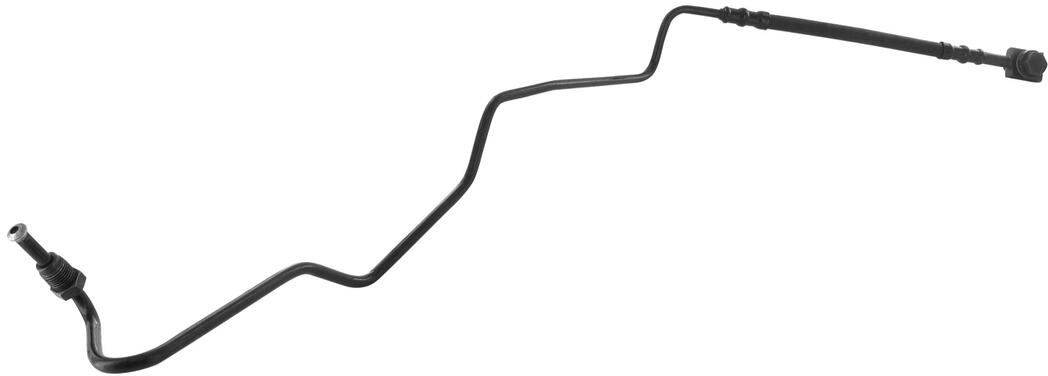
QUICK BRAKE CU-2300A-A Brake linesMaterial: Copper; Single/Dual Circuit Brake System: 2-circuit brake system; Braking System: for vehicles with brake booster, for vehicles with disc brakes on the front axle, for vehicles with brake force regulator, for vehicles without brake booster, for vehicles with drum brake at the front and rear axle, for vehicles without brake force regulator, for vehicles with drum brakes on the rear axle, for vehicles with disc brakes on the rear axle; Fitting Position: Centre, Rear, Centre right, Front, Centre left, Right Front; Vehicle type: 60/100/115/125; Construction Year from: 06/1976; Brake Caliper Type: Brake Caliper (2 pistons); Construction Year to: 10/1976, 12/1991; Vehicle Identification Number (VIN) to: 17A 0011705, 70-T-199999; Wheelbase: short wheelbase, long wheelbase; Braking/Driving Dynamics: for vehicles without ABS, for vehicles with ABS; Wheelbase [mm]: 2920, 3320, 3620; Vehicle Identification Number (VIN) from: 70-T-200001; for RPO number up to: 0751010,49 £*Shipping: 8,45 £Secure redirect to the provider


-
How do you check if two lines have a common point?
To check if two lines have a common point, you can use the equations of the lines to solve for the point of intersection. If the lines are in the form of y = mx + b, you can set the two equations equal to each other and solve for the x-coordinate of the point of intersection. Then, you can plug the x-coordinate back into one of the equations to find the y-coordinate. If the lines have the same point of intersection, then they have a common point. If the lines are parallel and do not intersect, then they do not have a common point. **
-
How do show lines and working lines differ in dogs?
Show lines and working lines in dogs differ primarily in their breeding purpose and physical characteristics. Show lines are bred for conformation to breed standards and are often selected for their appearance in dog shows. Working lines, on the other hand, are bred for their ability to perform specific tasks such as herding, hunting, or protection work. Working lines tend to have a higher drive, energy level, and intelligence compared to show lines, as they are bred for their working abilities rather than their appearance. Additionally, working lines may have a more athletic build and higher stamina to excel in their designated tasks. **
-
Is the calculation correct? Check if the lines are parallel or identical.
To determine if the lines are parallel or identical, we need to compare their slopes. The slope of the first line is 2/3, and the slope of the second line is also 2/3. Since the slopes are equal, the lines are parallel. Therefore, the calculation is correct. **
-
Are laughter lines bad?
Laughter lines, also known as smile lines or crow's feet, are not inherently bad. They are a natural part of aging and are often seen as a sign of a life filled with joy and laughter. Some people may embrace their laughter lines as a symbol of their happy moments and experiences. However, if someone is self-conscious about their laughter lines, there are various cosmetic treatments available to help reduce their appearance. Ultimately, whether laughter lines are considered "bad" is subjective and depends on individual preferences. **

Are these lines normal?
No, these lines are not normal. They are jagged and uneven, which may indicate a problem with the printer or the print settings. It is recommended to check the printer for any issues, such as clogged nozzles or low ink levels, and adjust the print settings to ensure a smooth and clear printout. **
What are contour lines?
Contour lines are lines on a map that connect points of equal elevation. They help to represent the shape and elevation of the land by showing how steep or gradual the terrain is. Contour lines that are close together indicate a steep slope, while contour lines that are further apart indicate a more gradual slope. By following contour lines, hikers and outdoor enthusiasts can better understand the topography of an area and plan their routes accordingly. **
Top-Angebote
Products related to Lines:
-
How can one quickly check the collinearity of lines?
One quick way to check the collinearity of lines is to calculate the determinant of a matrix formed by the coefficients of the lines. If the determinant is zero, then the lines are collinear. Another method is to compare the slopes of the lines - if the slopes are proportional, then the lines are collinear. Additionally, one can also check if the lines intersect at a single point, as collinear lines will intersect at infinitely many points. **
-
Why are equipotential lines always perpendicular to field lines?
Equipotential lines are always perpendicular to field lines because the electric field is always perpendicular to the equipotential surface. This is because the electric field is the gradient of the electric potential, and the gradient is always perpendicular to the equipotential surface. Therefore, the equipotential lines, which represent points of equal electric potential, must be perpendicular to the electric field lines. This relationship ensures that work done in moving a charge along an equipotential line is zero, as the electric field does no work in a direction perpendicular to its field lines. **
-
How do you check if two lines have a common point?
To check if two lines have a common point, you can use the equations of the lines to solve for the point of intersection. If the lines are in the form of y = mx + b, you can set the two equations equal to each other and solve for the x-coordinate of the point of intersection. Then, you can plug the x-coordinate back into one of the equations to find the y-coordinate. If the lines have the same point of intersection, then they have a common point. If the lines are parallel and do not intersect, then they do not have a common point. **
-
How do show lines and working lines differ in dogs?
Show lines and working lines in dogs differ primarily in their breeding purpose and physical characteristics. Show lines are bred for conformation to breed standards and are often selected for their appearance in dog shows. Working lines, on the other hand, are bred for their ability to perform specific tasks such as herding, hunting, or protection work. Working lines tend to have a higher drive, energy level, and intelligence compared to show lines, as they are bred for their working abilities rather than their appearance. Additionally, working lines may have a more athletic build and higher stamina to excel in their designated tasks. **
Similar search terms for Lines
-
QUICK BRAKE CU-2300A-A Brake linesMaterial: Copper; Single/Dual Circuit Brake System: 2-circuit brake system; Braking System: for vehicles with brake booster, for vehicles with disc brakes on the front axle, for vehicles with brake force regulator, for vehicles without brake booster, for vehicles with drum brake at the front and rear axle, for vehicles without brake force regulator, for vehicles with drum brakes on the rear axle, for vehicles with disc brakes on the rear axle; Fitting Position: Centre, Rear, Centre right, Front, Centre left, Right Front; Vehicle type: 60/100/115/125; Construction Year from: 06/1976; Brake Caliper Type: Brake Caliper (2 pistons); Construction Year to: 10/1976, 12/1991; Vehicle Identification Number (VIN) to: 17A 0011705, 70-T-199999; Wheelbase: short wheelbase, long wheelbase; Braking/Driving Dynamics: for vehicles without ABS, for vehicles with ABS; Wheelbase [mm]: 2920, 3320, 3620; Vehicle Identification Number (VIN) from: 70-T-200001; for RPO number up to: 0751010,49 £*Shipping: 8,45 £Secure redirect to the provider
-
QUICK BRAKE CU-2700A-A Brake linesMaterial: Copper; Braking/Driving Dynamics: for vehicles with ABS, for vehicles without ABS; Fitting Position: Centre, Rear, Right Front, Centre right, Centre left, Front, Right Rear; Vehicle Identification Number (VIN) to: 179755, A476019, 6K-TR069 486; Vehicle Identification Number (VIN) from: 179756, A060862; Construction Year to: 08/1989, 09/1974, 12/1988; Braking System: for vehicles without brake booster, for vehicles with brake force regulator, for vehicles with disc brakes on the rear axle, for vehicles without brake force regulator, for vehicles with drum brakes on the rear axle, for vehicles with brake booster; Construction Year from: 10/1974, 08/1977, 01/1977, 04/2007; Transmission Type: Automatic Transmission; Number of Doors: 3-phase, 5; VET Number to: 367396; VET Number from: 36739711,99 £*Shipping: 8,45 £Secure redirect to the provider
-
Is the calculation correct? Check if the lines are parallel or identical.
To determine if the lines are parallel or identical, we need to compare their slopes. The slope of the first line is 2/3, and the slope of the second line is also 2/3. Since the slopes are equal, the lines are parallel. Therefore, the calculation is correct. **
-
Are laughter lines bad?
Laughter lines, also known as smile lines or crow's feet, are not inherently bad. They are a natural part of aging and are often seen as a sign of a life filled with joy and laughter. Some people may embrace their laughter lines as a symbol of their happy moments and experiences. However, if someone is self-conscious about their laughter lines, there are various cosmetic treatments available to help reduce their appearance. Ultimately, whether laughter lines are considered "bad" is subjective and depends on individual preferences. **
-
Are these lines normal?
No, these lines are not normal. They are jagged and uneven, which may indicate a problem with the printer or the print settings. It is recommended to check the printer for any issues, such as clogged nozzles or low ink levels, and adjust the print settings to ensure a smooth and clear printout. **
-
What are contour lines?
Contour lines are lines on a map that connect points of equal elevation. They help to represent the shape and elevation of the land by showing how steep or gradual the terrain is. Contour lines that are close together indicate a steep slope, while contour lines that are further apart indicate a more gradual slope. By following contour lines, hikers and outdoor enthusiasts can better understand the topography of an area and plan their routes accordingly. **
* All prices are inclusive of VAT and, if applicable, plus shipping costs. The offer information is based on the details provided by the respective shop and is updated through automated processes. Real-time updates do not occur, so deviations can occur in individual cases. ** Note: Parts of this content were created by AI.